
Angela Helped Nodal Find Out About the Robbery His Parents Committed Against Him
Angela Helped Nodal Find Out About the Robbery His Parents Committed Against Him is the dramatic claim now circulating through celebrity gossip communities, triggering heated debate among fans of Christian Nodal and Ángela Aguilar. While no verified official statement confirms the exact accusation behind the viral phrase, the theory has gained enormous traction because audiences remain deeply invested in every detail surrounding Christian Nodal’s personal life, relationships, and family dynamics.
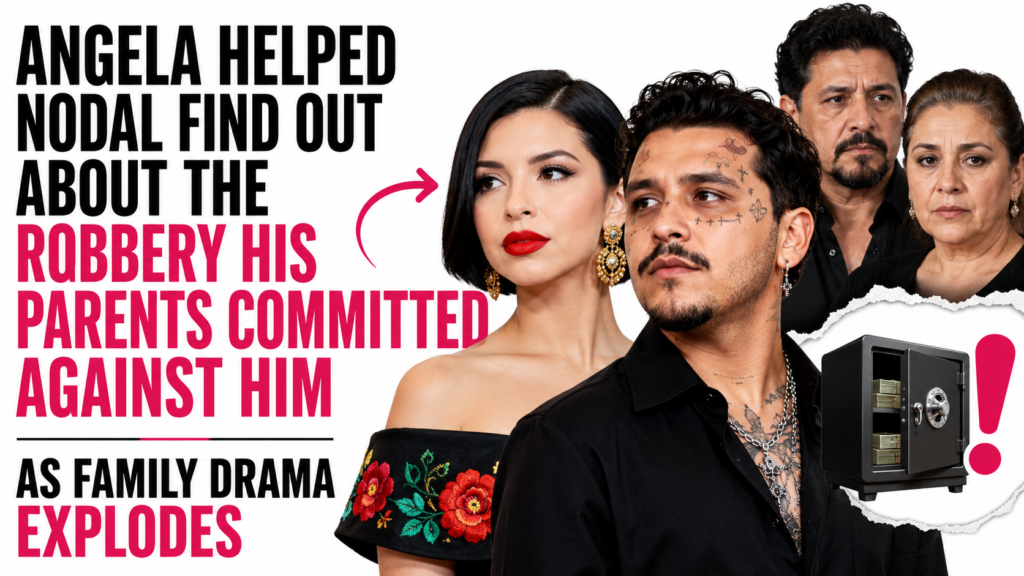
Celebrity audiences are naturally drawn to stories involving betrayal, family conflict, hidden secrets, and emotional loyalty. This particular narrative contains every ingredient needed for viral momentum. A successful singer. A controversial relationship. A family conflict. Allegations of betrayal. And a romantic partner positioned as the person who helped uncover the truth.
That emotional formula explains why the phrase spread so quickly.
The claim suggests that Ángela Aguilar may have played a supportive role in helping Christian Nodal recognize a deeply personal betrayal involving his own family. Although entertainment speculation often amplifies emotionally dramatic interpretations, many fans believe the story fits broader narratives already surrounding celebrity finances, family control, and public image management.
Christian Nodal has remained one of the most heavily discussed figures in Latin entertainment for years. His relationships, public decisions, emotional transitions, and family connections are constantly analyzed online. That environment makes it easy for even speculative stories to grow rapidly.
Once gossip pages began discussing the theory, social media communities immediately reacted. TikTok creators produced emotional edits. Facebook entertainment groups began debating possible motivations. Celebrity reaction channels turned the phrase into dramatic discussion topics.
The core reason this rumor resonates is emotional relatability. Stories about family betrayal are universally compelling because they strike deep psychological themes: trust, loyalty, pain, and personal awakening.
Many fans interpreted the rumor symbolically rather than literally. Even without confirmed evidence, some audiences believe Ángela Aguilar represents emotional support during what they imagine as a difficult period in Christian Nodal’s personal life.
Others view the story much more skeptically.
Critics argue that celebrity gossip culture often exaggerates vague situations into emotionally explosive narratives without sufficient proof. According to this perspective, stories involving theft, betrayal, or family wrongdoing should not be accepted without credible evidence.
Still, emotional speculation tends to spread faster than factual clarification.
That pattern is common in celebrity digital culture. Once a dramatic emotional narrative begins circulating, audiences actively expand it through interpretation, commentary, and symbolic storytelling.
Some social users began connecting this theory to larger discussions about celebrity finances and management. Music careers often involve family members, business advisors, contracts, revenue management, and internal tensions that outsiders rarely fully understand.
That complexity makes speculative stories feel believable, even when details remain unclear.
Ángela Aguilar’s involvement adds another emotional layer. Because her relationship with Christian Nodal continues generating strong public reactions, audiences naturally position her inside nearly every emotional storyline connected to him.
Supporters frame her positively in this scenario.
They suggest she could represent trust, emotional partnership, or clarity during a confusing personal moment. In that framing, the story becomes less about scandal and more about emotional loyalty.
Opponents interpret the rumor differently.
Some argue that fan communities intentionally dramatize Ángela Aguilar’s role to intensify existing controversies surrounding her relationship with Christian Nodal. Celebrity narratives often become simplified into emotional archetypes: the loyal partner, the betrayer, the victim, the rescuer.
Reality is usually much more complicated.
Yet simplified emotional storytelling performs exceptionally well online.
This explains why TikTok and Facebook celebrity gossip ecosystems thrive on stories like this. Short emotionally charged narratives invite audience participation. Users choose sides. Debate intensifies. Engagement grows.
Christian Nodal’s history of public emotional visibility contributes significantly to this dynamic. Because his romantic life has unfolded so publicly, audiences often feel emotionally entitled to ongoing interpretation.
Each new rumor becomes another episode in a larger emotional storyline.
Family-centered celebrity controversies also carry special emotional power because they combine fame with intimate betrayal themes. Unlike relationship gossip, family conflict feels more psychologically intense.
The phrase “Angela Helped Nodal Find Out About the Robbery His Parents Committed Against Him” taps directly into that emotional territory.
Some entertainment commentators believe that stories framed around betrayal spread faster precisely because audiences instinctively imagine themselves in similar situations. Personal projection increases emotional investment.
Others caution against normalizing serious allegations through entertainment speculation.
Claims involving theft or wrongdoing carry reputational implications that should be handled carefully. Without confirmed reporting, viral narratives risk becoming emotionally persuasive fiction rather than responsible commentary.
Nevertheless, the internet rarely waits for formal clarification.
By the time factual responses emerge, public narratives are often already emotionally established.
This phenomenon reflects broader changes in celebrity media consumption. Traditional entertainment journalism once filtered rumors through editors, verification, and formal reporting. Today, social platforms accelerate emotional speculation instantly.
TikTok reaction culture magnifies this effect dramatically.
A creator can post an emotionally charged theory, attach dramatic music, include symbolic visuals, and millions of viewers may emotionally engage before any verification occurs.
That ecosystem rewards emotional storytelling over nuance.
For Ángela Aguilar, this creates both opportunity and risk.
Positive narratives portray her as emotionally supportive and loyal. Negative narratives frame her as entangled in controversy.
Both interpretations fuel engagement.
Christian Nodal’s family dynamic remains a particularly sensitive subject because celebrity audiences often speculate about financial influence, decision-making, and personal trust.
Financial betrayal narratives consistently perform strongly because money intensifies emotional reactions. Combined with family relationships, the emotional impact becomes even stronger.
Some users compared the current theory to previous celebrity family disputes in Latin entertainment, where financial disagreements eventually became public.
Those comparisons increase perceived plausibility.
Whether justified or not, audiences often use familiar celebrity patterns to interpret new rumors.
This is why emotionally recognizable story structures spread so effectively.
The public is not simply evaluating facts—they are responding to narrative familiarity.
Another important factor is unresolved ambiguity.
No definitive clarification allows audiences to continue imagining possibilities. Emotional uncertainty sustains engagement far longer than clear resolution.
That is exactly why rumors like this remain active.
Every new appearance, silence, or interview becomes interpreted as potential evidence.
Some fans insist that Ángela Aguilar’s visible support for Christian Nodal makes the theory emotionally believable.
Others reject the entire premise as exaggerated celebrity gossip.
Both positions keep the story alive.
And from a digital media perspective, controversy itself becomes content fuel.
Engagement algorithms prioritize emotionally divisive narratives because disagreement produces comments, shares, reaction videos, and repeat visits.
That economic reality shapes celebrity discourse.
For readers, the central question remains unresolved: is this a meaningful reflection of private emotional truth, or simply another example of social media constructing emotionally satisfying celebrity fiction?
At present, no confirmed reporting verifies the exact accusation contained in the viral phrase.
Yet its emotional cultural impact is undeniable.
The story resonates because it combines universally compelling themes: trust, betrayal, money, family conflict, romantic loyalty, and emotional awakening.
That combination almost guarantees viral performance.
Whether the theory ultimately proves grounded in reality or fades as speculation, it has already succeeded in capturing audience attention across entertainment communities.
And as long as ambiguity remains, the public conversation will likely continue expanding.
Because in modern celebrity culture, emotionally compelling narratives often become larger than verified facts themselves.